One of my new year resolutions was to play more frequently golf (at least once a week) in 2018. I started to plan and prioritize my future activities to be able to achieve this goal. When I know that I do not have enough time for 9 or 18 holes, I usually practice on the driving range.
I know that this is very typical of today’s golfers and the time constraint is a regular excuse for both golfers and non-golfers to play golf.
This is one of the reasons why during the midweek periods we can hardly see people playing golf. What can a golf club manager do to attract golfers to play more during this part of the week?
Further discounted tee time prices are not an option. It is not good for your reputation, but neither to your profitability. I don’t think that golfboards or faster golf cars would be the right solutions to help modern golfers’ time pressure.
Last year I met with Olivier Dhotel (Co-Founder, CEO, eGull Pay) whose idea was very likable and realistic solution to the above-mentioned phenomenon, but also to how could golf clubs stop midweek tee time sales crisis (or at least to mitigate it).
He is offering nothing else, but a flexible tee time sales solution. The essence of it is that you are able to pay by hole instead of wasting your money on 9 or 18 hole green fee while playing only a few ones.

One-size fits none!
Golf clubs should embrace the fact that their customers are looking for meaningful experiences. It is not enough to meet the expectations of golfers, you must exceed them by adding value to customers’ life. I can only hope that you don’t think of customization and personalization as two passing buzzwords or caprice.
To be able to retain our existing customers and to grow the game we have to become as flexible as we can. Furthermore, we should be much more adaptive and proactive to shape meaningful experiences. In short, to stay/become RELEVANT to our customers. Our service should enhance their lifestyles.
Today, it is not a surprise or a novelty to see more and more golf clubs are utilizing and providing flexible membership offers.
This is why I am hopeful when I hear that the European Tour is trying to come up with new game formats (e.g. GolfSixes, Super 6) and supporting such digital solutions like the above mentioned eGull Payment.
The advent of on-demand green fee payment solutions
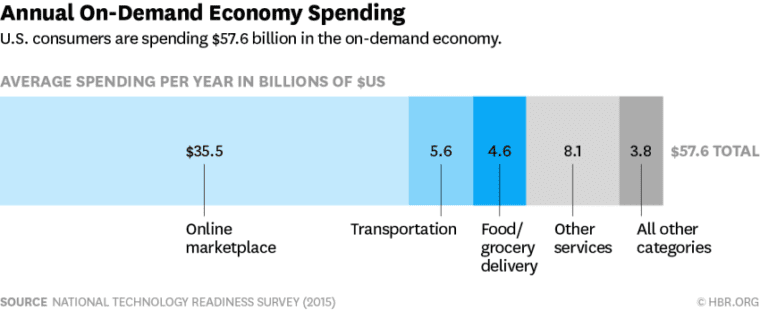
I have got an impression more and more companies are trying to come up with Uber-like on-demand services. The on-demand economy last year was worth approximately $57 billion. In the US, the on-demand economy is attracting more than 22.4 million consumers annually. Such service could attract a diverse group of customers.
The NTRS data shows:
- 49% of on-demand consumers are millennials (age 18-34), but 30% are between 35 and 54, and 22% are age 55 or older.
- The majority of on-demand consumers are still white (63%), followed by African American (17%), Asian (12%), and Hispanic (9%) consumers.
I think golf clubs should start now to get prepared for the on-demand economy, not just to mitigate green fee revenue loss in midweek periods by services like eGull Pay, but also to stay relevant to more and more people. Let’s not forget the changes in our societies (e.g. changes in family composition and households).
One more note at the end, today’s customers are expecting from every business they interact with to provide personalized service. So we have to re-align our golf club business model to be able to compete more effectively.
We have to understand that there is NO one type of customers.