
In the previous post I started to explain why wearable technology solution could improve golf retail experience. I highlighted 3 major areas for improvement:
- product information and related services,
- in-store communication and navigation;
- payment solutions.
In this post I am focusing on how wearable technology solutions can improve in-store communication and navigation + payment solutions.
A recurring situation in stores that we are wandering around to find the product we are looking for. Wouldn’t it be more pleasant if we could get help without interacting with the shop assistant? Sometimes, such questions as “Can I help you, sir” can be annoying for me. It is good to discover the shop and find out what I want alone. However, a discreet assistance can be handy. Can you imagine that your smartwatch or Google Glass would tell you the right direction to the desired product (+if it is available).
Payment solutions
Today when the number of connected devices reached the critical mass, wearable payment technology is not a fantasy any more. Cisco is expecting that there will be 50 billion internet-connected devices (in 2013: 13 billion) in 2020.
Part of a pleasant customer experience is how seamless is the payment process. The main expectations today from payment solutions are to be frictionless and customers shouldn’t toil. In brief it is all about convenience and speed of the transaction. We should not spend unnecessary time with payment during our stay in the golf club whether we are in the pro-shop.
Thanks to geo-locational and biometric sensors, wearables can really enhance the payment experience in that way I described above. The positive experience with the wearable payment solution can support other phases of the customer journey, such as loyalty and consideration.
Probably you remember from last year Barclays' contactless payment wristband (bPay). Barclays' is trying to convince us to to ditch cash for digital. At this moment in over 300,000 places people can already use bPay wristband. It is a good example that wearable payment is viable. Other good example is Disney's MagicBand wearable device. The MagicBands allow visitors to choose whether they share their personal data. So the wearable device can be a source of consumer insight where we can learn about our customer behaviour.
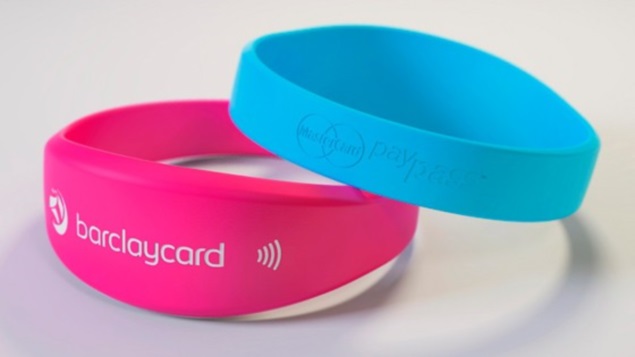
I think the following two wearable payment solutions can be interesting for you:
FitPay is wearable payment solution that enable us to pay with it without credit card, wallet, mobile or even without opening a mobile app. FitPay also enables retailers to cusotmize their services for us.
The other interesting wearable payment solution is Wallaby. This helps customers to maximize the rewards and check their credit card's balance.