More than three years ago I thought to share with you my thoughts about NPS (Net Promoter Score) as a tool to measure customer experience in golf clubs and golf resorts. In that article (later The Golf Business magazine republished it), I wrote that in such markets like the golf course industry where potential buyers have a greater tendency to ask friends or acquaintances for advice before deciding on a purchase, Net Promoter Score (NPS) can be a useful tool.
I also added that NPS can be a good springboard from which the evaluator can engage in a deeper conversation with the respondent.
Recently, I came across with an interesting debate on the Forrester Research blog about the usefulness of NPS. The writer highlighted few interesting flaws:
- NPS is being used as a direct measure of customer experience (CX) quality when it isn’t one. ⇒ Don’t be lazy to discover the components of customer experience measurement. Consider as well your golf club guests’ and members’ emotions and their influence on loyalty.
- The NPS calculation is based on studies, however, it might happen that it will not be suitable for your customers.
I hope I don’t have to explain to you why it is important that the question used for NPS should make sense to your customers. We cannot neglect either the effect of NPS on our employees. Will NPS energize our employees to act?
I am not quite sure that those golf club members and guest who buy a membership and green fee year-by-year or week-by-week they are loyal customers. We cannot be relaxed and happy if we get a high NPS score because it not necessarily means/correlates with customer loyalty, retention or growth.
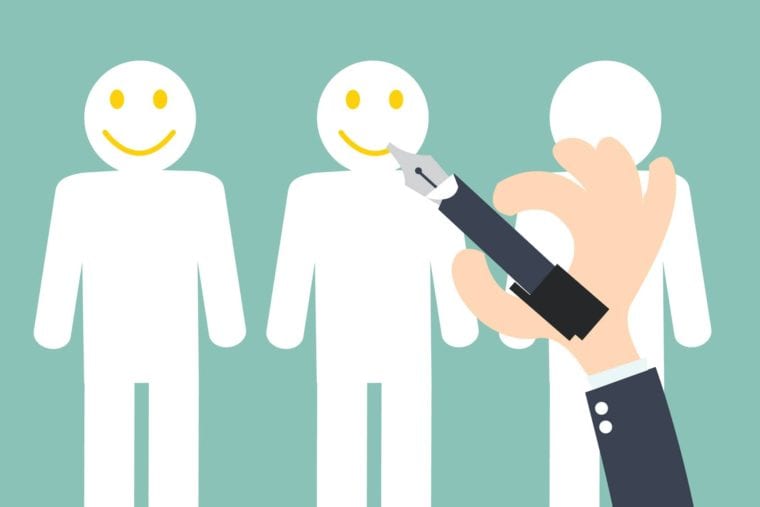
I think if golf clubs want to avoid sameness they not just have to invest in customer experience development, but focus more on their customers’ emotions. This means that golf clubs should create an emotional connection based strategy because our purchases are not necessarily rationals.
The emotional connection based strategy should be implemented in every step of the customer journey.
Here are some emotional motivators golf clubs can utilize:
- Enjoy a sense of well-being,
- Feel a sense of belonging,
- Be the person I want to be,
- Environment protection,
- Succeed in life, etc.
If we can make them passionate about our golf club and golf in general then we have got a good chance they will stay with us and spend more money (and not just time). They have to feel “this golf club gets me.”
A meaningful, memorable, omnichannel customer experience can bond emotionally customers to your golf club. These emotionally engaged customers will be much more profitable than those who are coming to your golf club as a result of habit/custom or to meet certain expectations of their friends and business partners.
So, when you plan your customer experience investment, you should focus on those elements that can drive emotional connections (e.g. personalized offers/services; remembering the customers by name + what are their preferred drinks, foods, brands; fluent tee time booking and order etc.).
Next time when you ask your guests or members about their experience you should ask explicitly about their emotions and feelings. The bad news is that your customers won’t be able to tell precisely which aspects of the experience resonates with their emotional motivators.
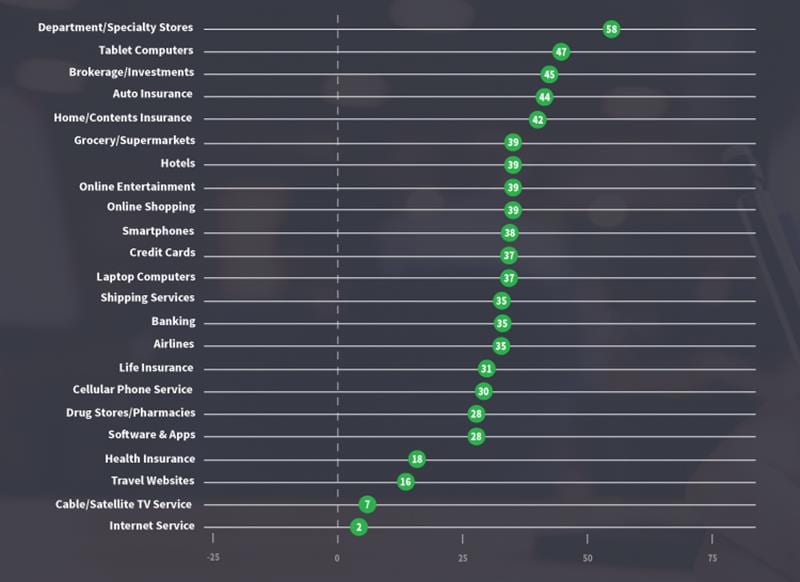
Check out the chart below that shows various product and service categories’ average NPS score. Hotels’ average NPS score is 39. (Source: NICE Satmetrix).